Instant coffee has spent a decade being quietly rehabilitated. The category used to mean spray-dried commodity robusta; now there are single-origin, specialty-grade instants that survive being compared to filter coffee. The interesting ones tell you where the beans came from.
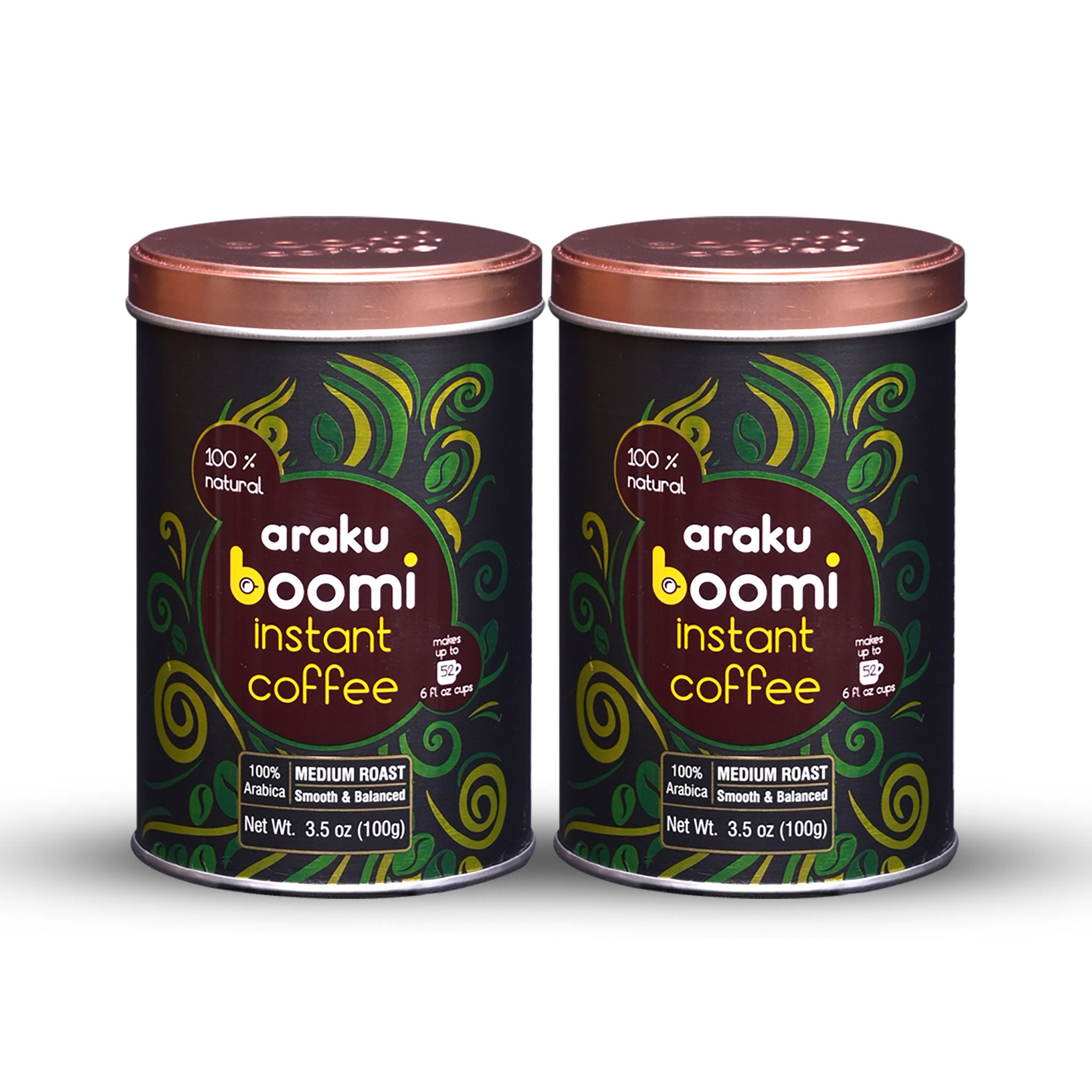
Boomi Coffee does that clearly — Araku Valley in the Eastern Ghats of India, shade-grown at 3,000 feet, 100% arabica, grown by tribal farming communities. That is a real and specific origin story. There are also two things on the listing that need pointing out before you buy: a pricing table that rewards reading carefully, and a product claim that carries no evidence.

The range, as listed
| 3.5 oz, pack of 2 (7 oz) | $19.99 — $2.86 per oz |
|---|---|
| 3.5 oz, pack of 4 (14 oz) | $36.99 — $2.64 per oz |
| 3.5 oz, pack of 6 (21 oz) | $53.99 — $2.57 per oz |
| 7 oz, pack of 2 (14 oz) | $34.99 — $2.50 per oz |
| Origin | Araku Valley, Eastern Ghats, India |
| Altitude | 3,000 ft, shade-grown |
| Bean | 100% arabica, medium roast |
| Stated notes | Fruity, caramel, bittersweet finish |
| Title claims | Low acid, mold free, tastes like filter coffee |
Buy the 7 oz jars, not the six-pack
Run the arithmetic across the four options and the pricing ladder is not what it looks like. The obvious assumption is that the biggest bundle — the six-pack at $53.99 — offers the best value. It does not.
The 7 oz pack of two works out at $2.50 per ounce, cheaper per ounce than the 21-ounce six-pack at $2.57. It is also directly cheaper than the 3.5 oz pack of four: both give you 14 ounces of coffee, but the larger jars cost $34.99 against $36.99 for the smaller ones. Same coffee, same weight, two dollars less.
Unless you specifically want smaller jars — for freshness after opening, or to share — the 7 oz pack of two is the best value in the range, and it is not the one the bundle structure points you toward.
A note on the "was" price
The 3.5 oz two-pack shows a comparison price of $15.99 against a selling price of $19.99. The comparison price is lower than what you pay. A strikethrough price is meant to show a saving; here it shows the reverse. This is almost certainly a data entry error rather than anything intentional, but it is worth knowing that the pricing fields on this listing are not reliable.
What Boomi does well
A named origin, at a named altitude
Araku Valley is a genuinely notable coffee region — high-altitude, shade-grown arabica produced by tribal cooperatives in Andhra Pradesh, and increasingly recognised in specialty circles. Naming the valley, the altitude and the growing method puts this in a different category from instant coffee that says only "product of more than one country."
Shade-grown is a meaningful agricultural claim
Coffee grown under a canopy matures more slowly, which develops more complex sugars, and shade cultivation preserves bird habitat and soil structure in a way that full-sun plantations do not. It also produces lower yields, which is why most commodity coffee is not grown that way.
100% arabica, stated plainly
Most instant coffee is robusta or a robusta-heavy blend, because robusta is cheaper and dissolves well. Arabica has more acidity, more aromatic complexity and roughly half the caffeine. For an instant marketed on tasting like filter coffee, arabica is the necessary starting point.
Farmer attribution
Crediting the tribal communities of the Eastern Ghats is more than most coffee packaging manages, and it is consistent with the wider Araku model of grower-owned production.

Where I would want more
1. "Mold free" is an unsupported claim
This appears in the product title and nowhere else. There is no testing referenced, no laboratory named, no mycotoxin threshold quoted and no certificate of analysis linked.
Worth understanding what the claim is reaching for: coffee, like many agricultural products, can carry trace mycotoxins such as ochratoxin A, and a "mould-free coffee" marketing category has grown up around that concern. Regulators in the EU and elsewhere set maximum limits for ochratoxin A in coffee, and mainstream coffee is generally tested against them. A brand making an explicit mould-free claim should be able to show the testing that supports it. Ask Boomi for it — a genuine result would be a real differentiator, and its absence from the page is conspicuous given the claim sits in the product name.
2. "Low acid" without a pH figure
Also in the title, also unquantified. Coffee typically sits around pH 4.8 to 5.1, and "low acid" coffees are usually somewhere above 5.5 — a real and measurable difference. If you are buying this because coffee upsets your stomach, ask for the number. Note too that perceived acidity in tasting terms and actual pH are different things, and the description separately describes a "fruity flavour," which in coffee language usually means more perceived acidity.
3. Freeze-dried or spray-dried?
This is the specification that most determines instant coffee quality, and it is absent. Freeze-drying preserves aromatic compounds far better and is what specialty instants use; spray-drying is cheaper and drives off much of the aroma. A brand claiming its instant tastes like filter coffee is implicitly claiming freeze-drying, and should simply say so.
4. No roast date, no best-before
Instant coffee is more stable than ground, but it is not immortal, and a product sold on aromatic complexity should be dated.
5. No caffeine content, no cup yield
Neither the caffeine per serving nor the number of cups per jar is given, which makes the per-ounce comparison above the only way to judge value.
Who should buy it
- Anyone who travels or works away from a machine. Single-origin arabica instant is a genuinely better option than hotel coffee.
- People interested in Araku Valley coffee. The origin is real and worth trying.
- Buyers who care about shade-grown and grower attribution. Both stated clearly.
- Anyone who does the per-ounce maths. The 7 oz twin pack is good value.
Who should not
- Anyone buying specifically for the mould-free claim. Get the test data first, or buy on taste instead.
- People with acid reflux relying on "low acid." Ask for the pH.
- Filter coffee purists. Good instant is good; it is still instant.
- Anyone reaching for the six-pack. Check the 7 oz option first.
Verdict
The coffee itself has a credible story. Shade-grown high-altitude arabica from a named valley, produced by named communities, is a real specification rather than a vague one, and single-origin instant is a category worth exploring if you are stuck without a machine.
Two things temper the recommendation. The claims in the product title — mould free, low acid — are exactly the sort that need evidence, and none is offered. And the pricing table both contains an inverted comparison price and steers you toward a bundle that is not the best value. Buy the 7 oz twin pack, judge it on how it tastes, and ask Boomi for the mycotoxin testing if that claim is what drew you in.
All pack sizes are listed on the Boomi Coffee store, and our Boomi Coffee store page tracks their other live offers.
Disclosure: this article contains affiliate links. If you buy through them we may earn a commission at no additional cost to you. Prices and product claims were taken from the retailer listing at the time of writing and may change. This article is not medical or nutritional advice — if coffee affects a health condition, speak to a healthcare professional.