I have taught matcha preparation for years, and the hardest habit to break in new drinkers is treating matcha as a single product. It is not. The difference between two tins on the same shelf can be as large as the difference between a supermarket blend and an estate coffee — cultivar, region, shading method, harvest timing and grind all move the result enormously, and almost none of it appears on a typical label.
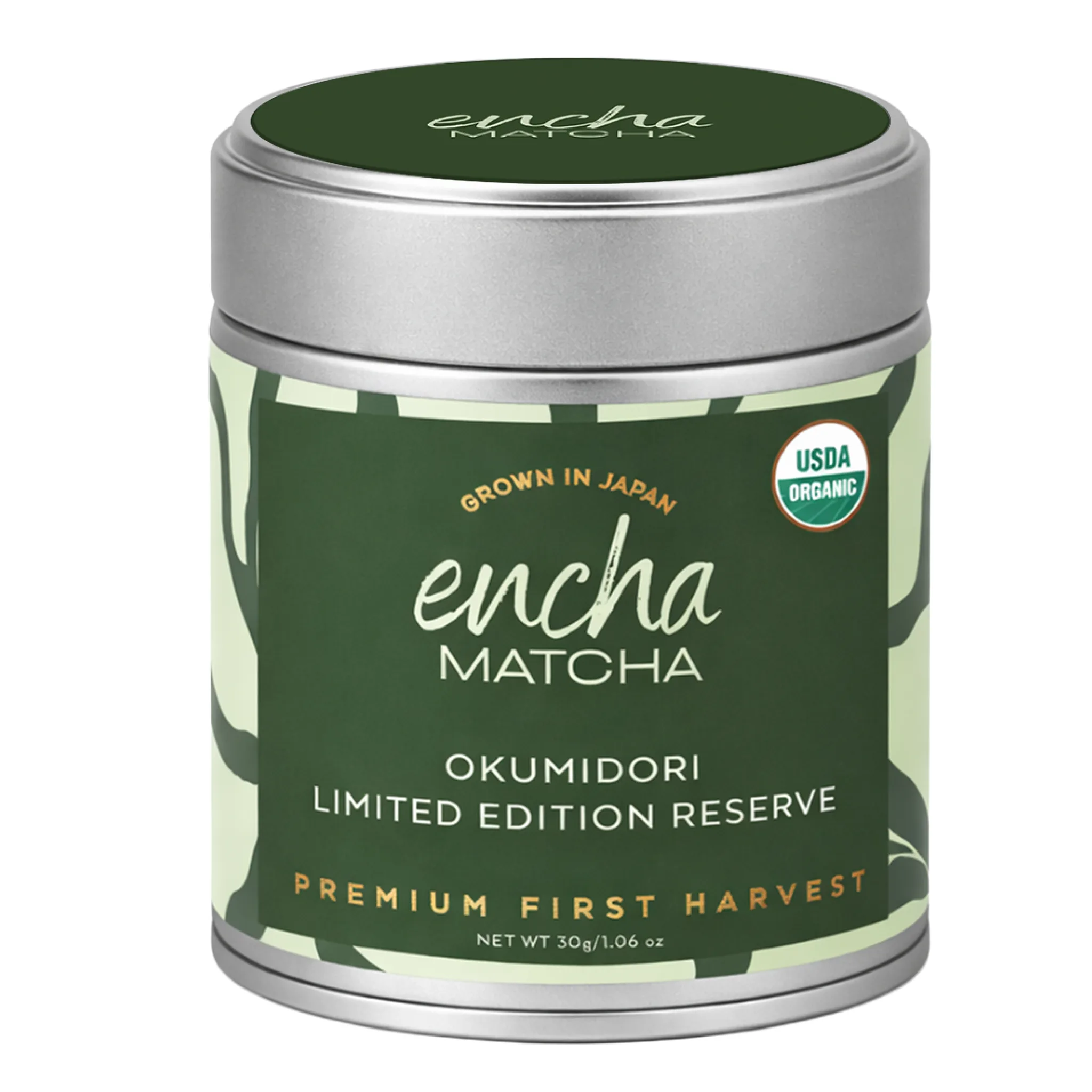
Encha’s Okumidori Limited Edition Reserve is interesting precisely because it puts that information on the label. It is a USDA Certified Organic, single-cultivar, single-origin ceremonial matcha at $39.99, and the brand is explicit that it is never blended. That is a meaningful claim, and it comes with meaningful trade-offs.

Specifications at a glance
| Product | Encha Matcha Tea Okumidori Limited Edition Reserve |
|---|---|
| Grade | Ceremonial |
| Cultivar | Okumidori (おくみどり) — single cultivar |
| Origin | Kagoshima, Japan — volcanic soil |
| Shading method | Traditional honzu shading |
| Harvest | First harvest, once per year, limited quantity |
| Picking | Hand-picked |
| Grind | Stone-ground |
| Blending | Never blended — one cultivar, one region, one harvest |
| Certification | USDA Certified Organic |
| Stated flavour notes | Dark chocolate richness, walnut creaminess, lingering buttery umami |
| Price at time of writing | $39.99 |
Reserve-tier matcha is priced by scarcity as much as by quality, and $39.99 sits at the point where it becomes a considered purchase rather than a habit. Current pricing, the sibling Saemidori reserve, and Encha’s cheaper everyday grades are all on the official Encha store.
What this Okumidori reserve gets right
Single cultivar is the claim that matters
Most matcha, including most matcha sold as ceremonial, is blended. Blending is a legitimate craft — it produces a consistent profile year after year — but it also averages away the character of any one leaf. Okumidori is a late-budding cultivar known for deep colour and a heavier, rounder body than the more floral Saemidori. Selling it unblended means you taste that cultivar rather than a house style, and that is genuinely rare at this price.
Honzu shading is the expensive way to do it
Honzu is the traditional shading method using layered rice straw and reed screens rather than modern synthetic cloth. It is slower, more labour-intensive and harder to control, and it is generally reserved for high-grade tencha. Its presence on a label is one of the more reliable signals that a producer is not cutting corners upstream.
Stone-grinding and first harvest
Stone mills grind slowly and stay cool, which protects the aromatic compounds that heat destroys. First-harvest leaf carries the highest concentration of theanine, which is what produces the sweet, savoury umami rather than the flat bitterness of later pickings. Combined, these two facts explain most of what you will taste.
The flavour description is specific, not generic
Encha describes dark chocolate richness, walnut creaminess and a lingering buttery umami, and frames the tea as built for someone who wants depth over delicacy. I appreciate a brand that tells you who a tea is not for. If you like bright, grassy, high-note matcha, this is being honestly signposted as the wrong tin.

Three things I would change
1. No harvest date, weight or particle data on the listing
For a reserve product sold on the strength of a single harvest, the listing I read does not state the harvest year, the tin weight, or a best-before date. Matcha oxidises; a tin that has sat in a warehouse loses the sweetness and vivid colour that you are paying a premium for. Before ordering, ask Encha for the harvest year and the net weight so you can work out the real cost per gram.
2. Limited quantity means you cannot rely on it
A tea harvested once a year in limited amounts is, by definition, something you may not be able to buy again. If you find a matcha you love and build a daily ritual around it, a limited reserve is a frustrating thing to fall for. Encha’s standard ceremonial and barista grades exist for that role, and the barista-grade latte powder is listed at $11.99.
3. The profile will not suit everyone, and $39.99 is a lot to find that out
Deep, chocolate-and-walnut Okumidori is a specific taste. Drinkers who came to matcha through bright, vegetal, ocean-like profiles often find heavier cultivars flat by comparison, and this tin is not the place to discover your preference. It is also a poor choice for lattes — the depth that justifies the price is largely lost under milk and sweetener.
Who should buy it — and who should skip it
Buy it if
- You already drink ceremonial matcha regularly, prepared usucha or koicha with water, and want to taste a specific cultivar rather than a house blend.
- You prefer rich, savoury, low-astringency tea over bright and grassy.
- You value organic certification and traceable single-origin sourcing enough to pay for it.
Skip it if
- Matcha lattes are your main use — the barista grade at $11.99 is the correct product and this is money wasted under milk.
- You are new to matcha and have not yet worked out which profile you like.
- You want something you can reorder indefinitely.
The verdict
This is a serious tea sold with unusual honesty about what it is. Single cultivar, single region, single harvest, honzu shaded, stone ground and organically certified is a genuinely uncommon combination at $39.99, and for an experienced drinker the transparency alone is worth the premium. My hesitation is entirely practical: the listing does not give a harvest year or a weight, and without those two numbers you cannot judge freshness or value properly. Ask first, then buy — and if you are still finding your palate, start with Encha’s standard ceremonial grade instead.
View the Okumidori Limited Edition Reserve at Encha — and if this is your first single-cultivar matcha, buy it alongside a standard ceremonial tin so you can taste the two side by side.
More offers, coupons and current promotions from this brand are collected on our Encha store page.
Disclosure: this article contains affiliate links. If you buy through them, GoSmartReview may earn a commission at no extra cost to you. Prices and specifications were taken from the official Encha store on 31 August 2026 and can change at any time.