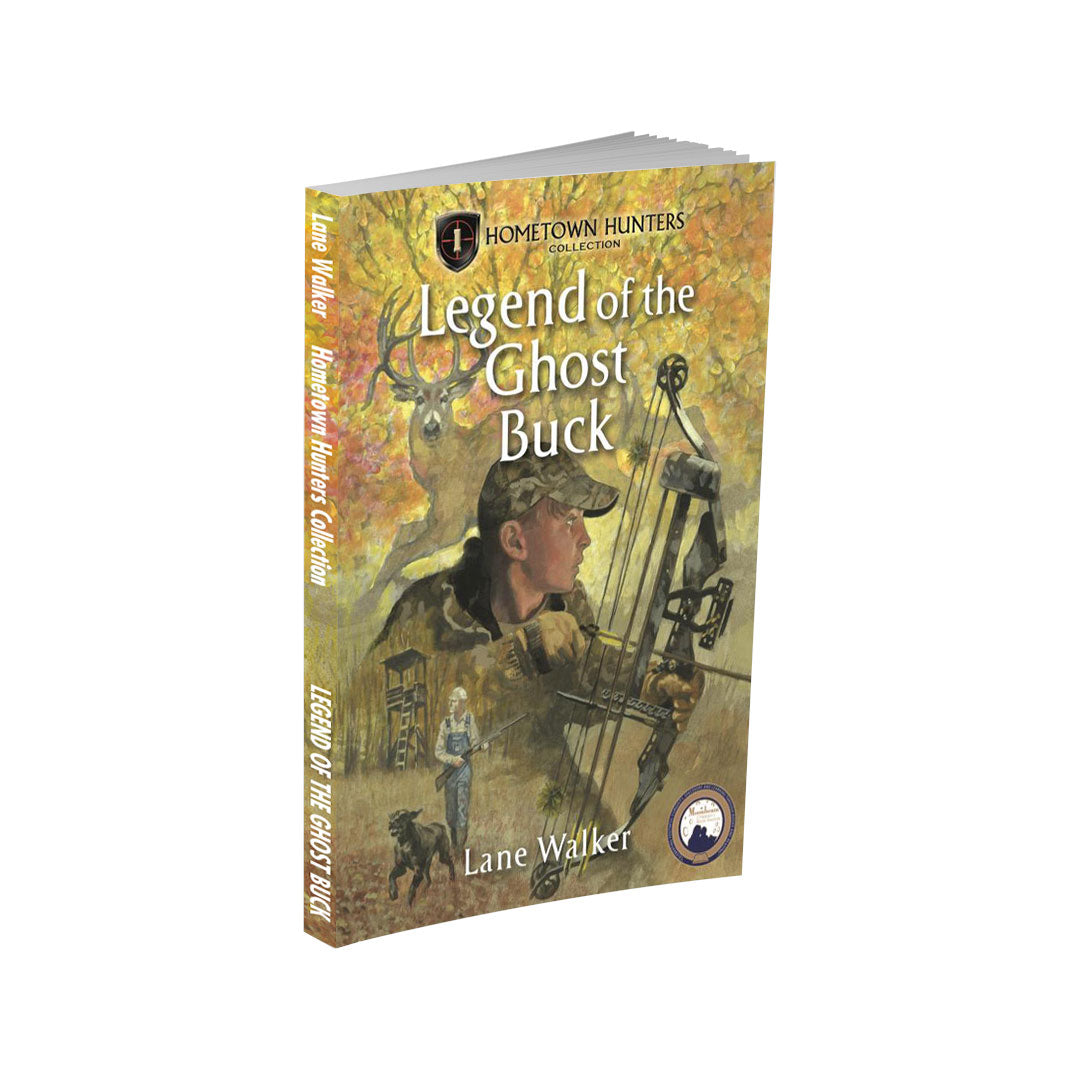
After a long run of product listings that omit the one number that matters, it is a pleasure to write about one that publishes everything. Lane Walker Books lists Legend of the Ghost Buck at $9.99, down from $11.99, and gives you its Lexile measure, its ATOS book level, its AR points, its interest level, its exact word count, its page count and its trim size.
Those are the figures teachers, librarians and parents of struggling readers actually use. And read together, they tell you something about this book that the age range alone does not.

The specification, as listed
| Title | Legend of the Ghost Buck — Hometown Hunters series |
|---|---|
| Price | $9.99 softcover (was $11.99) |
| Reading age | 8–14 · grades 4–8 |
| Lexile measure | 730L |
| ATOS book level | 4.8 · Interest level MG (4–8) · AR points 3.0 |
| Word count | 20,582 |
| Pages | 137 |
| Trim size | 5.25" × 7.5" |
| Award | Bronze Moonbeam Children's Book Award |
| Category | Fiction — Sports/Recreation, hunting |
| Themes | Friendship, faith, believing in yourself |
Read the numbers together: this is a hi-lo book
Here is what the specification quietly tells you. The interest level is Middle Grades, grades 4 to 8 — so up to around fourteen years old. But the ATOS book level is 4.8 and the Lexile is 730L, both of which correspond to roughly fourth to fifth grade reading ability.
That gap is deliberate, and it has a name: hi-lo — high interest, low reading level. These books exist for one of the hardest problems in children's literacy. A thirteen-year-old reading two years below grade level has a miserable choice: books at their reading level are written for eight-year-olds and feel humiliating, while books written for their age are too hard and confirm that reading is not for them.
A hi-lo title solves that. The sentences are accessible, the vocabulary is controlled, but the story, the protagonist and the stakes are pitched at a teenager. At 20,582 words across 137 pages — around 150 words per page, which is generous spacing — this is a book a struggling reader can genuinely finish. Finishing a book is often the thing that changes a reluctant reader's mind about reading.
If you are shopping for a fluent twelve-year-old, note the same numbers and understand this will be an easy read for them. If you are shopping for a reluctant one, this is exactly what you have been looking for.
What else the listing does well
AR points and ATOS level, published
Accelerated Reader is used across a great many schools, and children often need books at a specific ATOS level to count towards their targets. Giving the level (4.8) and the points (3.0) means a parent can check compatibility before buying rather than after. Very few publishers put this on a retail page.
The Lexile measure alongside it
Different schools use different systems. Publishing both Lexile and ATOS covers nearly everyone.
Word count
Unusual and genuinely useful. Twenty thousand words tells an experienced parent roughly how long this will take their child, in a way "137 pages" does not, since page counts vary with type size and trim.
An award that is named specifically
Bronze Moonbeam Children's Book Award — a specific award at a specific level, rather than a vague "award-winning". Verifiable claims are better claims.
A back-cover excerpt
Letting a child read a paragraph of the actual prose is the single best way to know whether they will get on with it, and the listing provides one.
The trim size is small for a reason
5.25" × 7.5" is a compact format that fits in a coat pocket or a school bag and does not look like an intimidating brick. On a hi-lo title, physical presentation matters as much as reading level.

Where I would want a little more
1. The subject is specific, and that cuts both ways
This is a hunting story. For a child who hunts, fishes, or grew up around it, that is precisely the appeal — hi-lo works best when the subject matter is something the reader already cares about, and outdoor-sports fiction for this age group is genuinely underserved. For a child with no interest in hunting, the specificity that makes it compelling for one reader makes it unappealing for another. Worth being clear-eyed about which child you are buying for.
2. No content guidance
Related to the above. Hunting fiction for middle-grade readers will contain scenes some families would want to know about in advance. The listing gives themes — friendship, faith, believing in yourself — but no content note. Reading the back-cover excerpt provided goes some way to answering this.
3. Softcover only, and no audiobook
One format. For reluctant readers specifically, an audiobook paired with the text is one of the most effective supports there is, and its absence is a missed opportunity on a hi-lo title.
4. "Rating: Not yet rated" is left in the specification table
An empty field showing on the live page. Cosmetic, but on an otherwise meticulous listing it stands out.
5. No series reading order
Hometown Hunters is a series and the listing does not say where this book sits in it, or whether the books stand alone. For a young reader who finishes one and wants the next, that matters.
6. No author biography
Absent from the product page.
Who should buy it
- Parents and teachers of reluctant readers aged 10–14. This is precisely the intended reader, and the numbers confirm it.
- Children interested in hunting, fishing or the outdoors. Fiction for this audience at this level is scarce.
- Anyone working to an AR target. Level 4.8, 3.0 points, stated up front.
- School and classroom libraries. $9.99 with full readability data is easy to justify.
Who should look elsewhere
- Strong readers aged 12 and up. They will finish it in an afternoon.
- Families uncomfortable with hunting content. The subject is central, not incidental.
- Readers who need audio support. Softcover only.
Verdict
This is the most completely specified product listing I have looked at in some time, and it happens to be for a $9.99 paperback. Lexile, ATOS, AR points, word count, page count, trim size, a named award and a sample of the prose — everything a parent, teacher or librarian needs to decide, published without being asked.
More importantly, those numbers reveal what the book actually is. The gap between a middle-grade interest level and a fourth-grade reading level is the definition of a hi-lo title, and hi-lo books do something valuable that few products do: they give a child who has decided they are bad at reading a book they can finish. For the right reader, $9.99 buys considerably more than 137 pages.
The full series is listed on the Lane Walker Books store, and our Lane Walker Books store page tracks their other live offers.
Disclosure: this article contains affiliate links. If you buy through them we may earn a commission at no additional cost to you. Specifications and prices were taken from the retailer listing at the time of writing and may change. Reading levels are guidance rather than rules — the right book is the one a particular child will actually finish.