Sunglasses are one of the few consumer products that are also personal protective equipment. A dark lens makes your pupils dilate. If that lens does not block ultraviolet light, you have engineered a situation where more UV reaches your retina than if you had worn nothing at all. This is why UV rating is not a feature — it is the entire point.
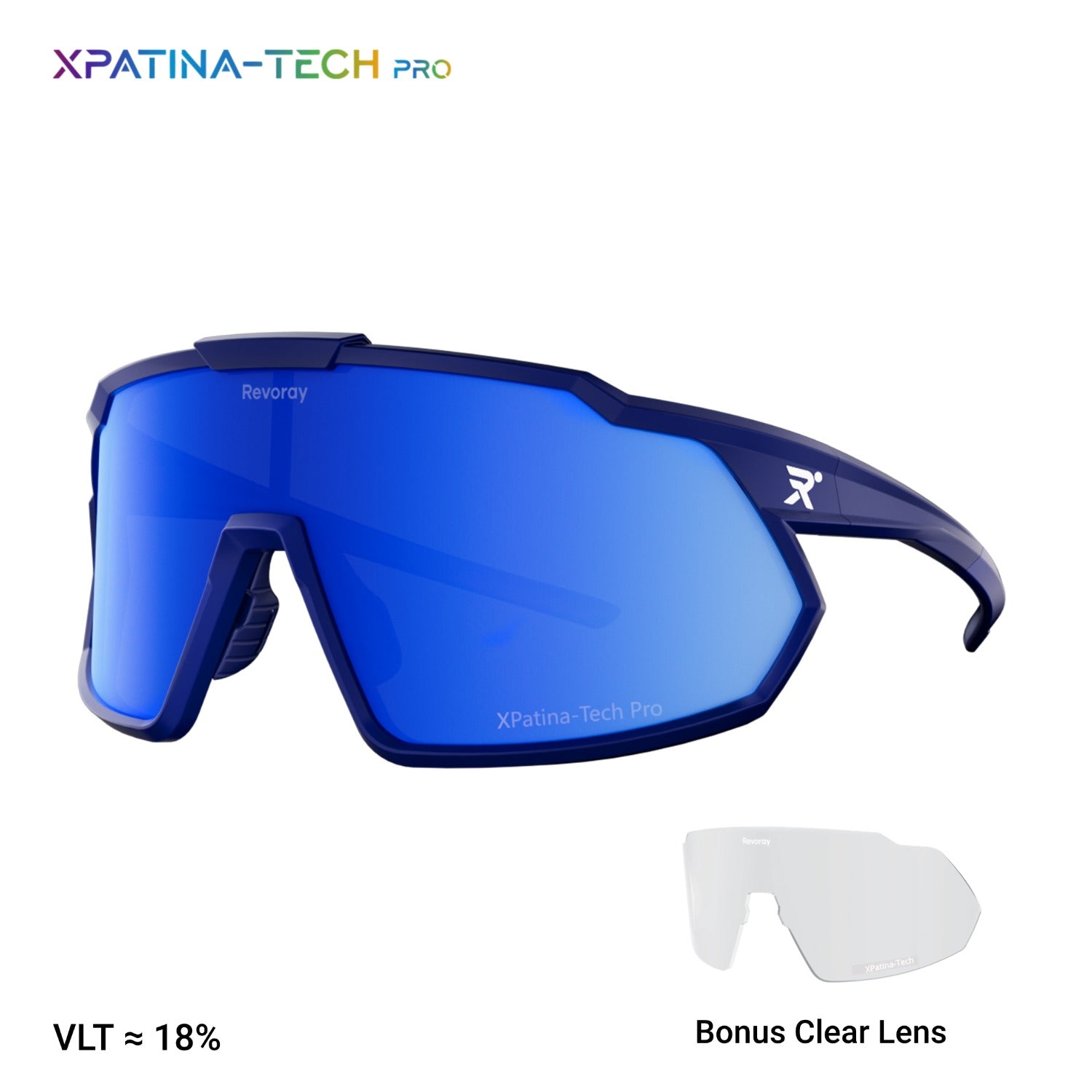
The Revoray Brisk Y1 High-Contrast Cycling Sunglasses cost $64.00, down from $80.00, in thirteen lens and frame combinations. They look like a serious piece of cycling eyewear. The listing does not state a UV rating, an impact standard, or a lens material — and for this category, those are the three things I would not buy without.

The specification, as listed
| Product | Revoray Brisk Y1 High-Contrast Ultra HD Cycling Sunglasses |
|---|---|
| Price | $64.00 (was $80.00) |
| Variants | 13 lens and frame combinations |
| Lens claim | Ultra HD high-contrast, enhanced depth perception and definition |
| Frame | Full frame, wraparound |
| Intended use | Mountain biking, road cycling, off-road |
| UV rating | Not stated |
| Impact standard | Not stated |
| Lens material | Not stated |
| VLT / lens category | Not stated |
The three questions to ask before buying
1. What is the UV rating?
Look for UV400, or "100% UVA and UVB protection." UV400 means the lens blocks wavelengths up to 400 nanometres, which covers the whole UVA and UVB range. Crucially, this has nothing to do with how dark the lens is — a clear lens can be UV400 and a very dark one can offer none at all. Cumulative UV exposure is associated with cataracts and other eye conditions, and cyclists spend long hours outdoors, often at altitude or near reflective surfaces.
Most reputable eyewear meets UV400 as a matter of course, and it is very likely these do. But "very likely" is not a specification, and this is the one claim I would want in writing before putting a tinted lens in front of my eyes for a four-hour ride.
2. What impact standard do they meet?
Cycling eyewear is not just for glare. At 40 km/h a flicked stone, a wasp or a low branch arrives with real energy, and the glasses are the only thing between it and your eye. The relevant standards are ANSI Z87.1 in the United States and EN 166 or EN ISO 12312-1 in Europe. Neither is mentioned.
3. What are the lenses made of?
Polycarbonate is the standard for sports eyewear because it is exceptionally impact resistant — it deforms rather than shattering. Cheaper alternatives such as acrylic can fracture into sharp pieces on impact, which is the failure mode you are wearing eye protection to avoid. TAC is a mid-range option. The material is not stated.
What the listing does get right
High-contrast lenses are a real technology, not marketing
Contrast-enhancing tints work by selectively filtering specific wavelengths — typically damping the yellow-green band — which increases the perceived separation between colours. On a trail, that translates into genuinely better definition of roots, rock edges and changes in surface texture, particularly in flat light under tree cover where everything otherwise turns into an undifferentiated brown. Revoray describing this in terms of spotting loose gravel and sudden terrain shifts is an accurate account of what the technology actually does.
A wraparound full frame is the correct shape
Wraparound geometry does two things: it blocks light and wind entering from the sides, and it keeps the lens close to the face so debris cannot get behind it. A full frame is heavier than a half-frame or rimless design but holds the lens more securely on rough ground. For mountain biking specifically, that is the right trade.
Thirteen lens and frame combinations
An unusually wide choice at this price, and it means you can match tint to the riding you actually do rather than accepting whatever the single option is.
$64 is a sensible price point
Premium cycling eyewear runs from $150 to $300. At $64, these sit in the range where you can own two tints for different conditions — which is more useful than one expensive pair.

Other gaps
4. No VLT figure or lens category, across thirteen tints
Visible light transmission tells you how much light gets through: a Category 3 lens passes 8–18% and suits bright sun, while Category 1 passes 43–80% and suits overcast conditions and dusk. With thirteen options and no VLT percentages, you cannot tell which of these is a bright-summer lens and which is an early-morning one. For a product bought by condition, this is the most practically useful number after UV — and it is absent for every variant.
5. Nothing about polarisation
Not mentioned either way, which matters because for cycling the answer is genuinely debatable. Polarised lenses cut glare from wet roads beautifully, and they can also mask the sheen that warns you a patch is icy, and they interfere with LCD bike computer screens at certain angles. Many cyclists deliberately avoid polarisation. You cannot make that choice here.
6. No weight, no anti-fog, no prescription option
Weight matters on the nose over several hours. Anti-fog coating matters the moment you stop climbing and the airflow does. And no RX insert compatibility is mentioned, which rules the product out for a large group of riders who need one.
7. No frame material or fit adjustment
Nothing about the frame plastic, and nothing about adjustable nose pads or temple arms — the two features that determine whether a wraparound sits correctly on your face or presses in the wrong places.
Who should buy them
- Trail riders in flat light. High-contrast tints genuinely help, and this is their best use case.
- Anyone wanting two tints rather than one expensive pair. At $64 that is affordable.
- Riders who have lost or scratched premium glasses. Lower stakes when they inevitably get dropped.
- Buyers who will ask first. One email covering UV, impact rating and lens material settles it.
Who should not
- Anyone who wants documented eye protection. No UV rating and no impact standard published.
- Prescription wearers. No insert compatibility mentioned.
- Riders choosing a tint for specific conditions. No VLT figures for any of the thirteen options.
- Anyone with a view on polarisation. Not stated either way.
Verdict
The design thinking is right. High-contrast lenses are a real advantage on technical terrain, a wraparound full frame is the correct shape for off-road riding, and thirteen combinations at $64 makes owning the right tint for the day realistic rather than aspirational.
What I cannot do is recommend buying eyewear that does not publish its UV rating, its impact standard or its lens material. These are almost certainly UV400 polycarbonate like most of the market — but "almost certainly" is not how protective equipment should be sold. Email Revoray, ask those three questions plus the VLT of the tint you want, and buy on the answers. If they come back clearly, this looks like good value. If they do not, that is your answer.
All thirteen combinations are listed on the Revoray store, and our Revoray store page tracks their other live offers.
Disclosure: this article contains affiliate links. If you buy through them we may earn a commission at no additional cost to you. Specifications and prices were taken from the manufacturer listing at the time of writing and may change. Eyewear worn for sport should meet a recognised impact standard — confirm certification with the manufacturer before relying on it for protection.