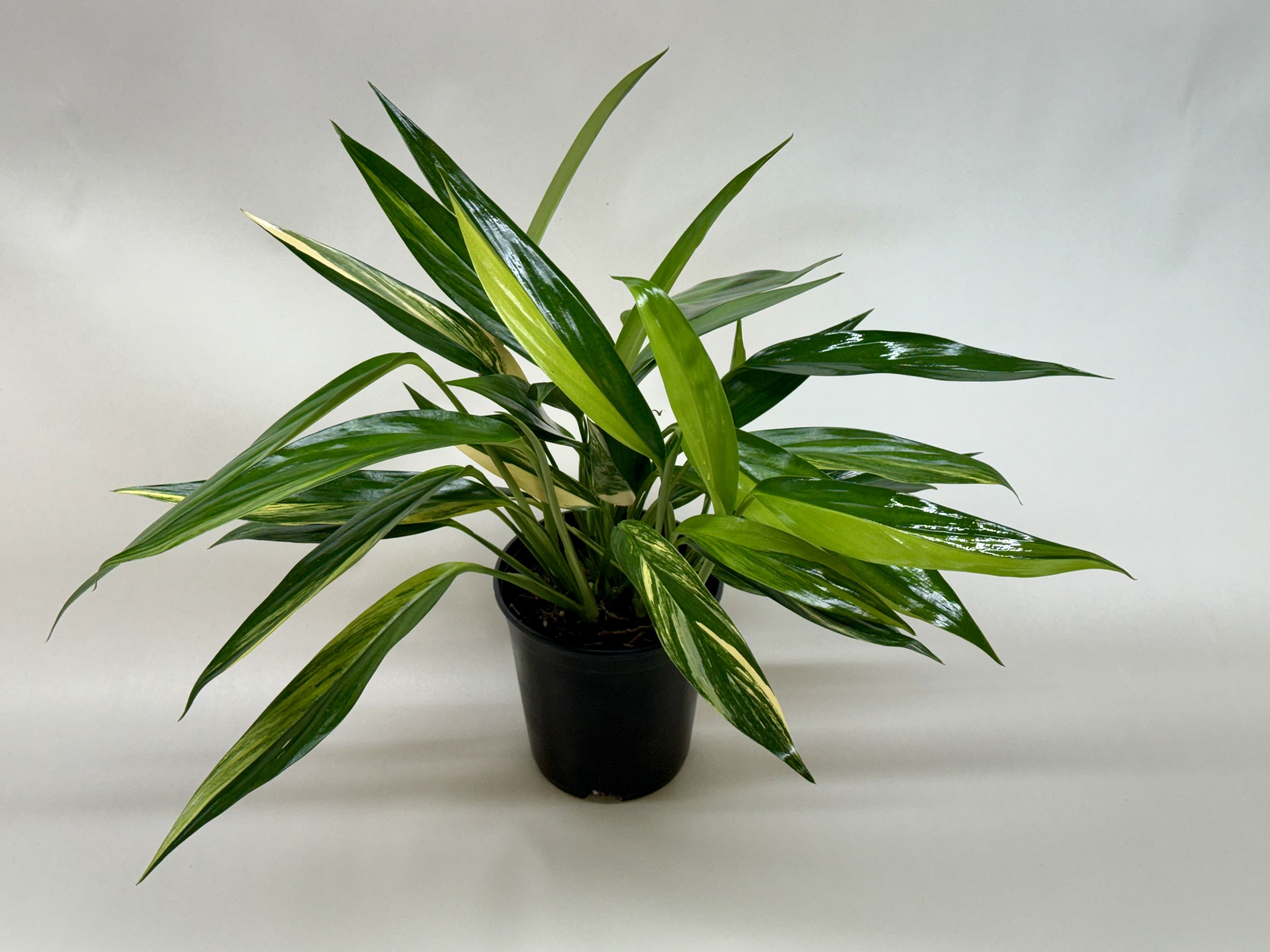
Pothos is the plant people recommend when they want you to stop killing houseplants. It tolerates neglect, low light, irregular watering, and the general chaos of a normal home. So when a pothos costs $44.99 instead of $15, the question is not whether it will survive — it is whether the specific cultivar is worth triple the price of the plant next to it at the garden centre.
The Leaf & Clay Pothos 'Silver Streak Variegated' is exactly that proposition. It is Epipremnum aureum 'Silver Streak Variegated', supplied in a 6" pot at $44.99. Here is what you are actually buying, and the four things I would want a first-time buyer of a premium pothos to understand.

The plant, as listed
| Botanical name | Epipremnum aureum 'Silver Streak Variegated' |
|---|---|
| Common name | Silver Streak Pothos |
| Price | $44.99 |
| Size supplied | 6" pot (single option) |
| Foliage | Narrow, elongated green leaves with silvery-grey streaks and subtle variegation; smooth, slightly glossy |
| Habit | Trailing / vining — shelves, hanging baskets, or climbing supports |
| Light | Bright indirect |
| Water | When the top inch of soil is dry |
| Soil | Well-draining |
What makes this one worth looking at
The leaf shape is the real differentiator, not just the colour
Most variegated pothos cultivars vary the pigment on a standard heart-shaped leaf. Silver Streak is described as narrow and elongated, which changes the plant's whole silhouette. Trailing from a shelf, narrow foliage reads as far more delicate and architectural than the usual dense heart-shaped curtain. If you already own a Marble Queen or a Golden Pothos, this will not look like more of the same — and that is the honest justification for the price gap.
Variegation that responds to light
The listing notes the silver markings become more pronounced in brighter light. That is a useful and specific piece of care guidance: it means you have some influence over how the plant looks. Give it a bright indirect position and you get more of the feature you paid for. Put it in a dim corner and you are paying premium money for a green plant.
The care profile is still pothos-easy
Bright indirect light, water when the top inch is dry, well-draining soil. Nothing here demands humidity domes, grow lights or a terrarium. That is the quiet luxury of buying an unusual pothos rather than an unusual calathea — you get the visual novelty without the maintenance penalty.
Six inches is a real plant
A 6" pot is an established specimen with meaningful trailing length, not a rooted cutting in a plug. That matters for the value calculation, because a great deal of "rare" plant retail is two-node cuttings at collector prices.

Four things to know before you order
1. Variegation can revert, and nobody guarantees otherwise
This is the most important caveat with any variegated plant. Variegated growth contains less chlorophyll, so it is less efficient — and a plant in insufficient light can push out increasingly green foliage. The listing tells you brighter light intensifies the silver; it does not warn you that dim light can cost you the variegation over time on new growth. If you cannot offer a genuinely bright indirect spot, buy a cheaper green pothos instead.
2. Pothos is toxic to cats and dogs
Epipremnum contains insoluble calcium oxalate crystals, which cause oral irritation, drooling and vomiting if chewed. This is not mentioned in the product description and it is the single thing I would most want a pet owner to check before adding a trailing plant to a shelf a cat can reach. Trailing habit and curious pets are a bad combination.
3. One size, one price, no options
The 6" pot is the only variant. Some of Leaf & Clay's other listings specify "nursery pot only" configurations; here you get one choice. If you wanted to start smaller and cheaper, that route is not offered on this cultivar.
4. It is a living thing shipped in a box
The listing describes the plant, not the shipping. Live plants travel poorly in temperature extremes, and whether heat packs are included in winter, how the plant is secured, and what happens if it arrives damaged are all things you should confirm at checkout rather than assume. Some leaf damage in transit is normal even from good nurseries; total plant loss should not be, and it is worth knowing the policy first.
Who should buy it
- Collectors who already own the common pothos cultivars. The narrow leaf shape is genuinely different, not a colour variant.
- Anyone with a bright indirect spot going spare. That is where this plant justifies its price.
- People who want unusual foliage without difficult care. Pothos care is forgiving; the aesthetic is not ordinary.
- Shelf and hanging basket displays. The trailing habit is the point.
Who should skip it
- Homes with cats or dogs that chew plants. Calcium oxalate is a real problem, and trailing vines are an invitation.
- Low-light rooms. You will lose the variegation you paid for.
- First houseplant buyers. Learn on a $15 golden pothos; the care is identical and the mistakes are cheaper.
- Anyone expecting an exact-match plant. Nursery photography is representative; individual plants vary.
Verdict
At $44.99 the Silver Streak is priced as a collector's pothos, and unusually for that category, I think the premium is defensible. The narrow, elongated leaf gives you a genuinely different plant rather than a recoloured version of one you already own, the 6" size means you receive an established specimen, and the care requirements remain firmly in beginner territory.
The two things the listing does not say are the ones that matter most. Give it real brightness or watch the variegation fade from new growth, and keep it away from pets that chew. Get those right and this is one of the easier ways to own something that looks rare without behaving like it.
Current availability is listed on the Leaf & Clay store, and you can see their other live offers on our Leaf & Clay store page.
Disclosure: this article contains affiliate links. If you buy through them we may earn a commission at no additional cost to you. Plant details and pricing were taken from the retailer listing at the time of writing and may change. If a pet ingests part of a houseplant, contact your vet.